• About Me
    • List of posts
    • Welcome to Matthew’s Notes

Matthew's Notes

  • Consent and Using Human Samples for Research

    August 20th, 2023

    For decades, a contentious question in healthcare has been – Should consent be necessary for the use of leftover human material in research?

    I would like to cover the main arguments in the cases for and against this idea. Both sides raise interesting ethical questions which are helpful to answer in an effort to navigate healthcare in everyones best interest. These will be the backbone ideas for each side – both could be dug into more thoroughly but I am mainly interested in conveying the main ideas.

    Here is my view on the matter; Consent should be necessary for the use of leftover human material in research.

    Against

    The ‘Against’ position holds that one believes consent should not be necessary in this matter – human tissue should be available for additional research irrespective of consent.

    To me, the most convincing point for this position is the principle of self-determination vs. solidarity. In this setting, acting with self-determination means the patient has the right to turn down the use of their biological material for research. Solidarity however, requires that the well-being of the group takes precedence over the individual. Because of the potential benefits that research could yield for humanity, especially in the case of rare diseases, a recipient of care is obliged to make humanity the beneficiary of their ailment. The opportunity cost associated with consent is a price that should definitely be reckoned with.

    For

    The ‘For’ position holds that one believes that obtaining consent should be necessary for the use of leftover human material in research.

    I think that most people would agree that healthcare should be a universal human right. If this is the standard that we aim for, then we must be respectful of differences in values – the right to healthcare should stand irrespective of an individuals beliefs. If an individuals belief system collides with further use of biological material for research, then it is not right to deny them care on these grounds. The well being of the individual takes importance over the loss of material for research.

    Here’s an important question to ask, and I think the answer compliments the ‘For’ position nicely:

    How important is the public perception of the healthcare system?

    I think the answer to this is very. The social benefits of requiring consent are higher than not, as it will increase trust and participation. If people maintain their autonomy, I think most would be willing participants in research anyways. Contrary to the ‘Against’ position, a system which denies consent is too costly in terms of samples lost due to unwillingness to seek out healthcare. The opportunity cost of not asking for consent higher than asking for consent.

    At first glance, the utilitarian approach to this question is to take the ‘Against’ position, as it maximizes the benefit to humanity through obtaining the most data possible with the highest sample yield. The more research done the better, right? Right, but I think it’s clear that more research will end up being done if healthcare policy adopts the ‘For’ position. More people will be willing to participate if they are educated on the potential benefits, as well as if they see the system as fair, respecting their autonomy. For a long time, this question did not have a concrete answer in healthcare policy. I believe it is important when making decisions to consider the information on both sides of the issue. The more information and knowledge we have, the easier it is to navigate these difficult decisions.
  • The Implications of the IRA on Drug Pricing

    August 1st, 2023

    With the goal of making headway into the clean energy transition, as well as reducing the cost of healthcare for American’s, the Inflation Reduction Act (IRA) of 2022 is a great example of government policy impacting the economics of private pharmaceutical ventures.

    The passing of the IRA has resulted in significant pushback from industry, with several large drugmakers taking the legislation to the Supreme Court on the grounds that the law is unconstitutional.

    How does the IRA have an effect on drug prices?

    The aspect of the IRA that has drawn the most attention from the pharmaceutical industry has been it’s Medicare Drug Price Negotiation Program. This law will allow Medicare, America’s federal healthcare insurance program, to directly negotiate for lower drug prices with pharmaceutical companies.

    The main complaint from industry has been centred around how this negotiation takes place. The IRA plans to give Medicare the authority to give monetary penalties to companies who do not sell at their selected price. The case being taken to court is that this policy is a violation of the Constitution, as it gives government the ability to obtain these products without paying market value.

    Implications on Small Molecule Drug Investment

    Medicare is set to start negotiation on 10 drugs starting in 2026. Beyond this initial phase of price control, the IRA will also allow Medicare to negotiate prices of small molecule drugs nine years following their entry onto the market. From the eye of the investor, it is understandable why you would want to allocate your money towards products that are not set to be lowered through price negotiation. This is the fact upsetting companies that develop small molecule drugs, as many have already felt the change in sentiment from investors.

    When you consider both sides of the story – from government and industry – you can see why many biotech companies find this decision from policymakers to be counterintuitive. Many patients who are eligible for Medicare may depend on the development of small molecule drugs, as they are the cohort most disproportionately affected by diseases like Alzheimers and cancer. By disincentivizing the development of small molecule drugs (with the intent of making these drugs more accessible for Medicare patients), this policy may not see the full extent of its intended benefits.

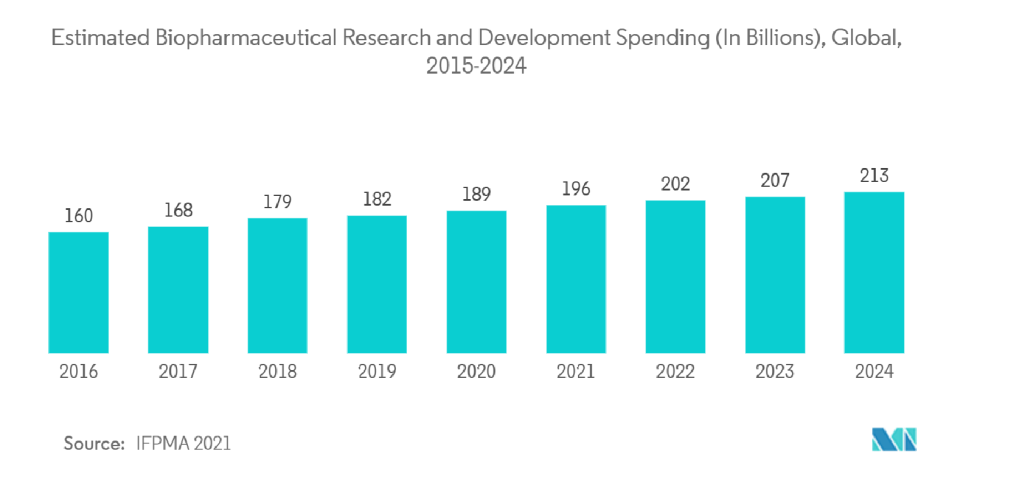
    Quick glance at the current climate of Biopharma funding

    This image has an empty alt attribute; its file name is screen-shot-2023-08-01-at-5.25.09-pm-1.png

    This is a projection of spending in the biopharmaceutical industry over the next few years, with data since 2016. While it is certainly true the biopharmaceutical industry has seen a rich increase in market valuation over the last decade, there is an observable change in this trend. According to HSBC’s innovation banking sector, since 2021, there has been a 55% decrease in early investment into small molecule startups, and a 45% decrease in venture capital spending. Many CEO’s of large pharmaceutical companies have voiced their concern over this trend, and are observing a change in investor’s willingness to move into these startups.

    My Takeaway

    I think that everybody would be in favour of essential drugs becoming more accessible to vulnerable populations. What the IRA’s effects on the biopharmaceutical industry has outlined for me, is just how difficult of a task this is. The government makes a policy that is intended to bring lower prices to consumers. However, significant backlash has been seen through the adverse reactions from many leaders of the industry. Not just the production, but the R&D of these small molecule drugs massively depends on industry, and if funding for this development is cut significantly, then how can they be expected to produce the same quality? It will be interesting to see how major players respond in terms of a reallocation of their R&D efforts. Perhaps resources will be concentrated more intensely towards therapies excluded from price negotiation, in an effort to attract greater investment. The question is then as follows; Will this policy help or hurt the the population that it is attempting to target?

Blog at WordPress.com.

  • Subscribe Subscribed
    • Matthew's Notes
    • Already have a WordPress.com account? Log in now.
    • Matthew's Notes
    • Subscribe Subscribed
    • Sign up
    • Log in
    • Report this content
    • View site in Reader
    • Manage subscriptions
    • Collapse this bar