With the goal of making headway into the clean energy transition, as well as reducing the cost of healthcare for American’s, the Inflation Reduction Act (IRA) of 2022 is a great example of government policy impacting the economics of private pharmaceutical ventures.
The passing of the IRA has resulted in significant pushback from industry, with several large drugmakers taking the legislation to the Supreme Court on the grounds that the law is unconstitutional.
How does the IRA have an effect on drug prices?
The aspect of the IRA that has drawn the most attention from the pharmaceutical industry has been it’s Medicare Drug Price Negotiation Program. This law will allow Medicare, America’s federal healthcare insurance program, to directly negotiate for lower drug prices with pharmaceutical companies.
The main complaint from industry has been centred around how this negotiation takes place. The IRA plans to give Medicare the authority to give monetary penalties to companies who do not sell at their selected price. The case being taken to court is that this policy is a violation of the Constitution, as it gives government the ability to obtain these products without paying market value.
Implications on Small Molecule Drug Investment
Medicare is set to start negotiation on 10 drugs starting in 2026. Beyond this initial phase of price control, the IRA will also allow Medicare to negotiate prices of small molecule drugs nine years following their entry onto the market. From the eye of the investor, it is understandable why you would want to allocate your money towards products that are not set to be lowered through price negotiation. This is the fact upsetting companies that develop small molecule drugs, as many have already felt the change in sentiment from investors.
When you consider both sides of the story – from government and industry – you can see why many biotech companies find this decision from policymakers to be counterintuitive. Many patients who are eligible for Medicare may depend on the development of small molecule drugs, as they are the cohort most disproportionately affected by diseases like Alzheimers and cancer. By disincentivizing the development of small molecule drugs (with the intent of making these drugs more accessible for Medicare patients), this policy may not see the full extent of its intended benefits.
Quick glance at the current climate of Biopharma funding
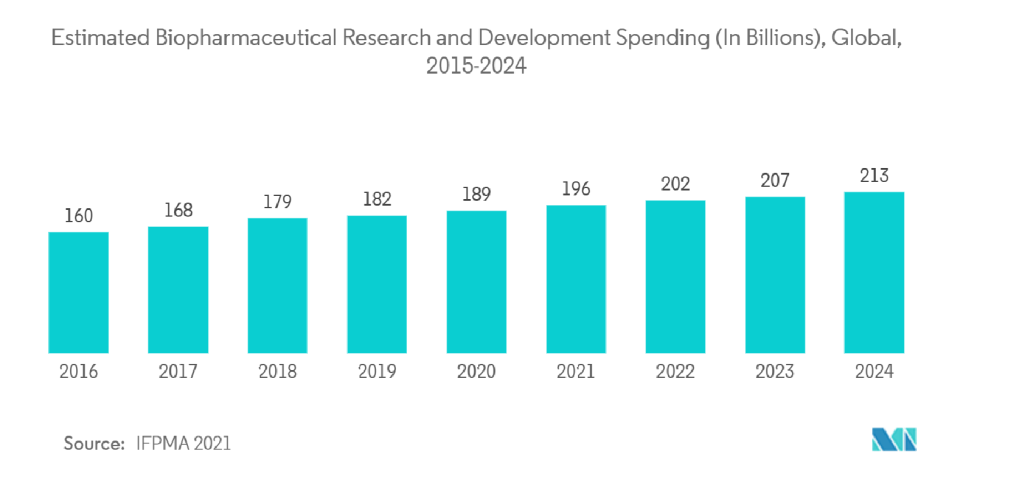
This is a projection of spending in the biopharmaceutical industry over the next few years, with data since 2016. While it is certainly true the biopharmaceutical industry has seen a rich increase in market valuation over the last decade, there is an observable change in this trend. According to HSBC’s innovation banking sector, since 2021, there has been a 55% decrease in early investment into small molecule startups, and a 45% decrease in venture capital spending. Many CEO’s of large pharmaceutical companies have voiced their concern over this trend, and are observing a change in investor’s willingness to move into these startups.
My Takeaway
I think that everybody would be in favour of essential drugs becoming more accessible to vulnerable populations. What the IRA’s effects on the biopharmaceutical industry has outlined for me, is just how difficult of a task this is. The government makes a policy that is intended to bring lower prices to consumers. However, significant backlash has been seen through the adverse reactions from many leaders of the industry. Not just the production, but the R&D of these small molecule drugs massively depends on industry, and if funding for this development is cut significantly, then how can they be expected to produce the same quality? It will be interesting to see how major players respond in terms of a reallocation of their R&D efforts. Perhaps resources will be concentrated more intensely towards therapies excluded from price negotiation, in an effort to attract greater investment. The question is then as follows; Will this policy help or hurt the the population that it is attempting to target?


One response to “The Implications of the IRA on Drug Pricing”
wow!! 3Consent and Using Human Samples for Research
LikeLike